

The Grey Matter
The business observability layer you’re missing, across nine vectors of your company.
Web appData & analyticsOther5 viewslaunched Nov 13, 2026
Comments
0
Osvaldo RestrepoMaker
What features would you like to see to improve The Grey Matter's business observability?
About The Grey Matter
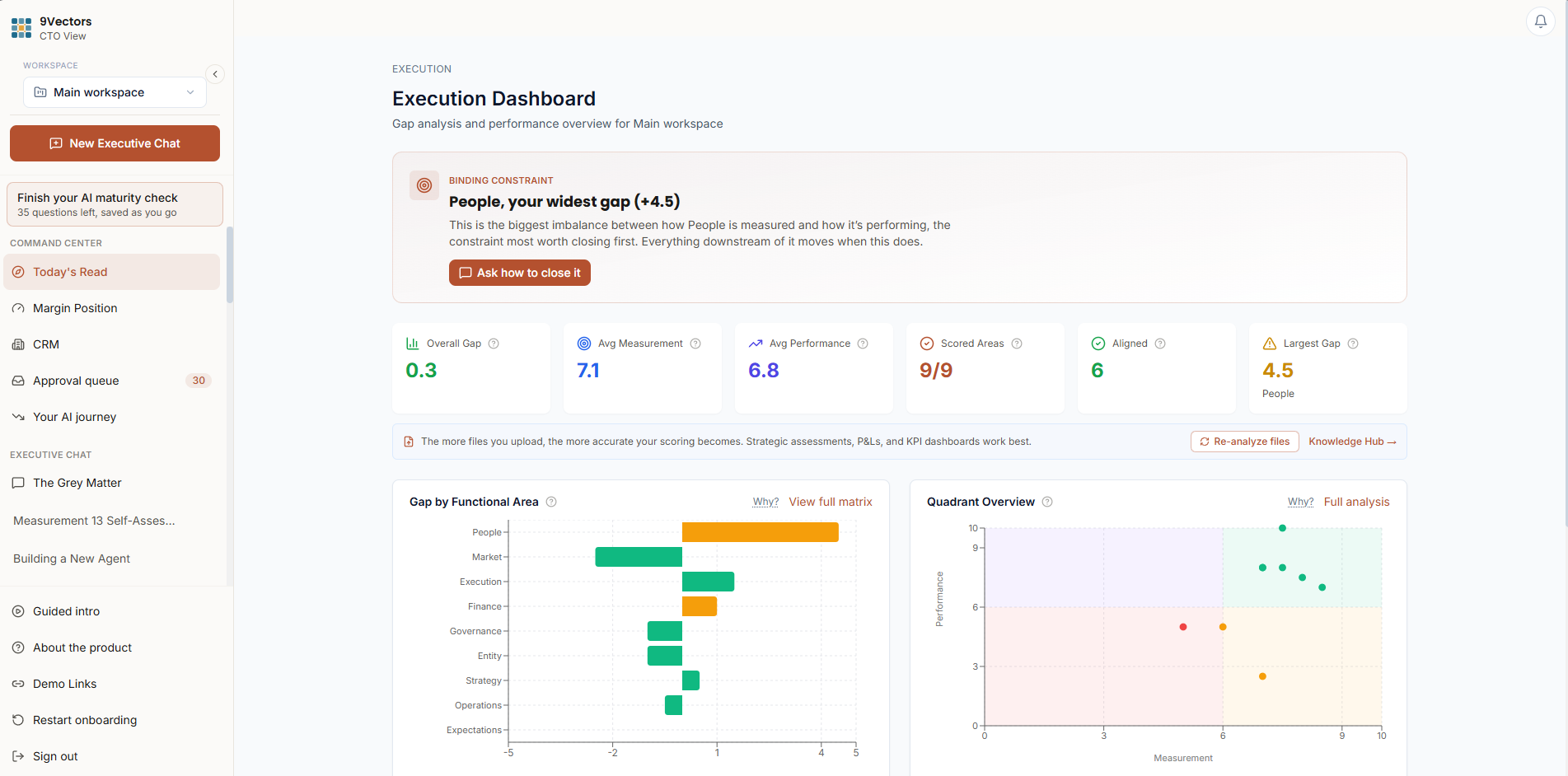
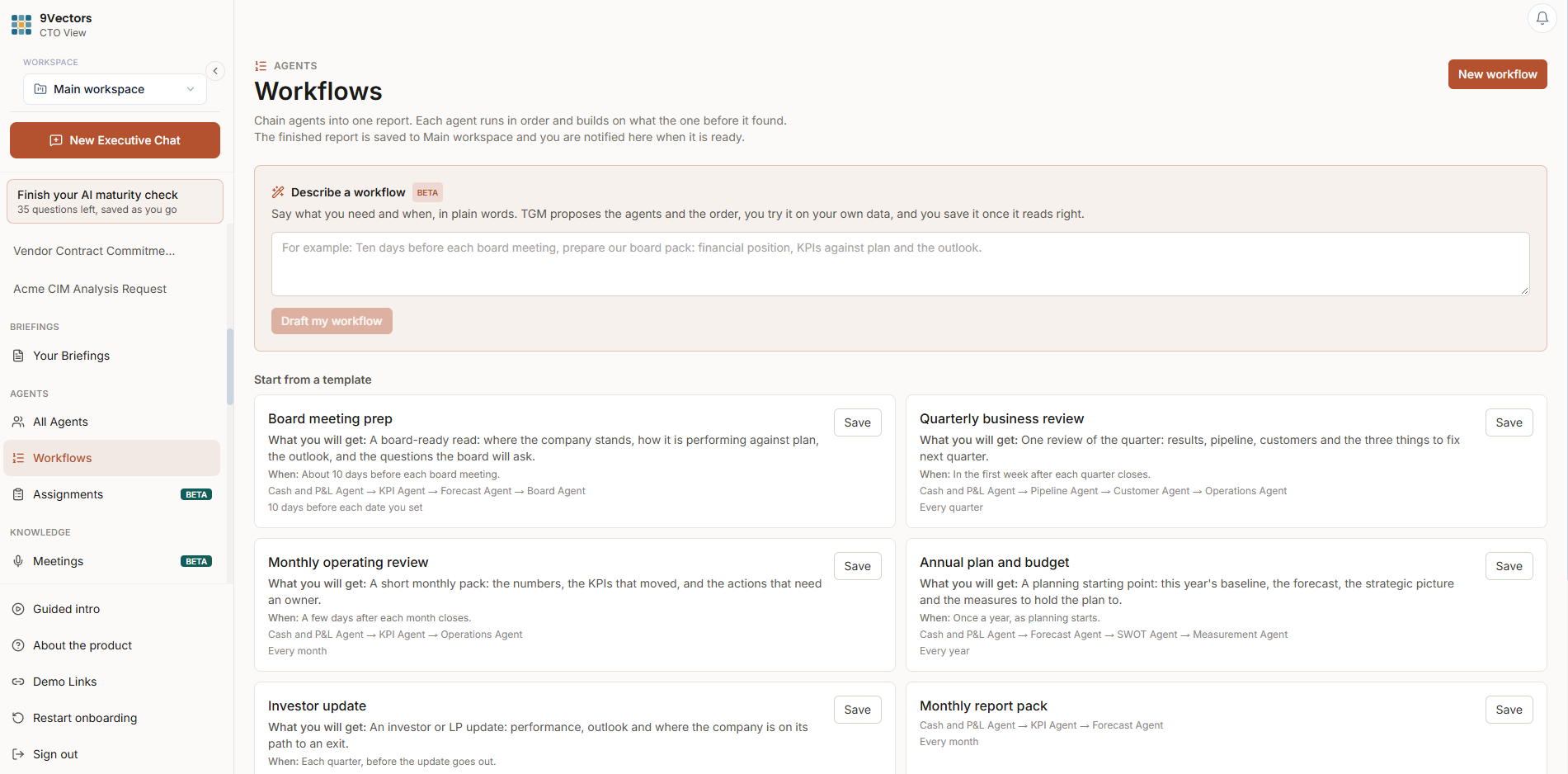
The Grey Matter (TGM) is an AI business observability platform built on the Nine Vectors Framework: a canonical view of a company across Assets (market, people, finance), Processes (strategy, operations, execution), and Structures (expectations, governance, entity), decomposed into 37 sub-vectors.
Diagnostic engines run over your own grounded evidence, your documents, financials, interviews, and connected systems. Each engine answers one executive question (pipeline health, forecast, valuation, exit readiness, org design, KPI tracking, DDQ coverage, deal playbook status) and reports what it does NOT know rather than estimating. Results stay scoped to a single workspace, so a portfolio company’s view never leaks across tenants.
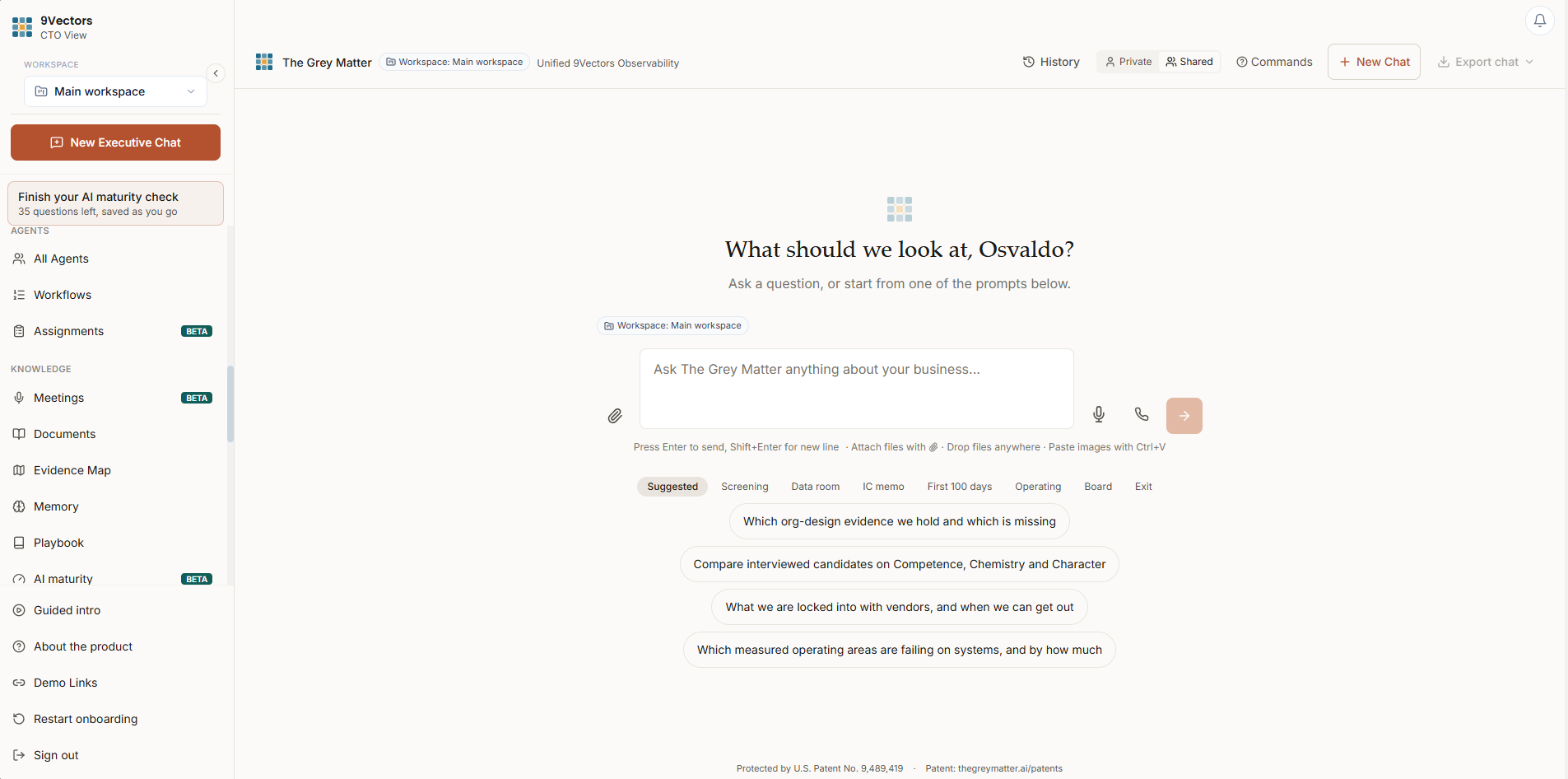
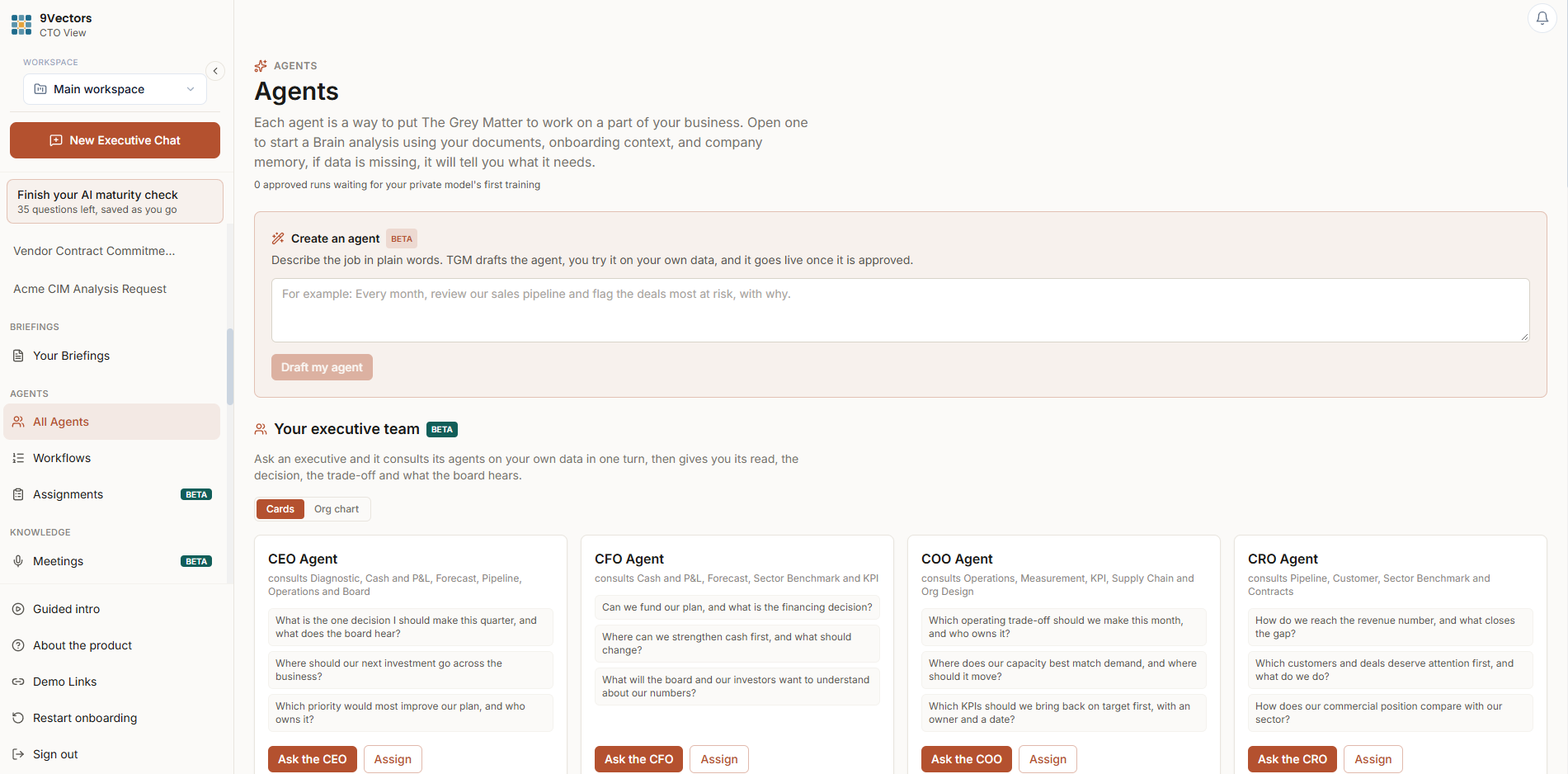
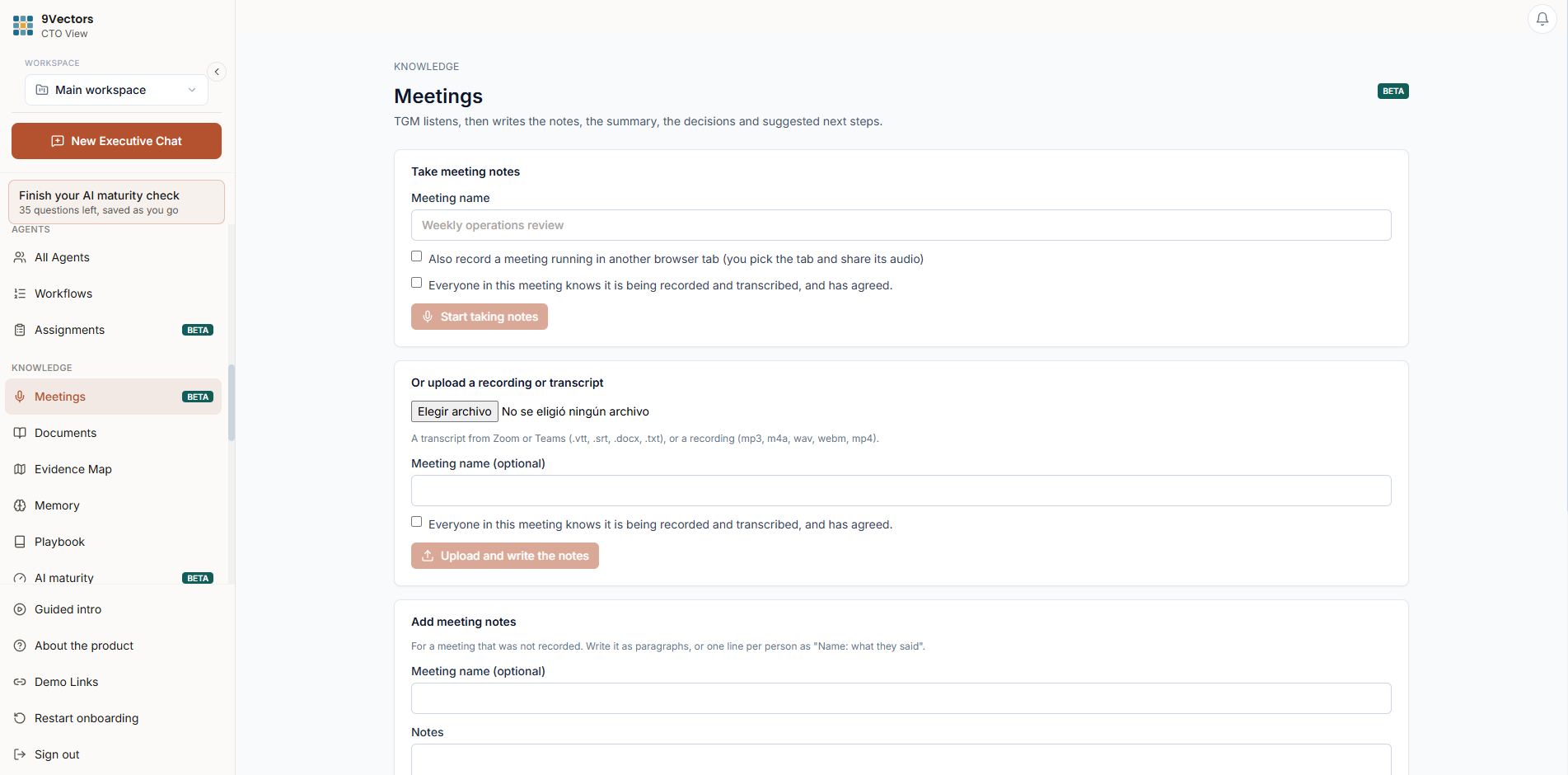
TGM orchestrates agents, playbooks, and measurement surfaces so operators, boards, and PE deal teams see where the business actually stands, not where a dashboard says it does. A guided demo walks through a portfolio company end to end.
How it was built with Claude
Claude Code did the heavy lifting. FastAPI + React, Azure Container Apps, Cosmos / Azure SQL / Neo4j, all built against Claude Code day to day. We run multiple worktrees in parallel so several Claude sessions can work on different slices of the product at once without stepping on each other.
The Anthropic SDK powers every diagnostic engine. Each engine is a tool-using agent that reads from the workspace’s own grounded evidence and is required to report what it does NOT know rather than estimate. That constraint is enforced in code, not by prompt alone; “the model confidently made something up” is the failure mode we spent the most time designing against.
An in-house MCP server exposes the whole Nine Vectors toolkit (tgm_board, tgm_forecast, tgm_valuation, tgm_exit_readiness, tgm_ddq, tgm_kpi, tgm_deal_playbook_status, tgm_crm_*, and dozens more). The same engines are callable from Claude Code during development and from Claude Desktop when an exec wants to interrogate their own workspace in natural language. One surface, two audiences.
Claude Skills carry the operator-facing workflows: guided tour, call prep, stakeholder updates, deal review, exit readiness. They live in the repo next to the code they drive, so a workflow change ships like any other PR. The hardest-won prompting lesson turned out to be about the project, not the model: instructions live in CLAUDE.md, but anything the model has to remember to be careful about becomes a CI gate instead. Rules teach, gates catch. The repo’s CLAUDE.md is the reading list; the gates are the safety net.
Gallery
Overview
Who is it for?
Businesses seeking AI-powered insights and observability
Problem
Difficulty in monitoring and understanding business performance data
Solution
Uses AI and the 9Vectors Framework to provide structured observability of business data
What makes it unique
Employs the 9Vectors Framework to guide AI-powered business observability
The maker
Maker · @orestrepoalva
Details
Platforms
Tech stack
Related launches
- 1
 AI Agent Testing by TestMu AI · Evaluate chat, voice, phone, video and image agents with scenarios and scored evidence.Featured
- 2
 MAQAMI · Book hotels and flights worldwide with member savings and prepaid checkout
- 3
 slim.to · Share and track documents with real-time notifications and page analytics directly from Claude
- 4
 Zami · AI-powered social analytics and creator discovery for teams
- 5
 2pm.space · Build AI agents to manage messaging, data queries, content, and documents
- 6
 Transica · Any website into ChatGPT and Claude as a hosted MCP app